Tell us what floor you have in mind. We will follow up to arrange a time to look at the concrete.
Epoxy flooring contractor · Waukesha, Wisconsin
Concrete floors finished for the way Waukesha actually lives
Road salt in January, a damp slab in April, a truck that comes home hot in July. We prepare and coat garage, basement, shop and commercial floors with those conditions in mind, so the finish you pick out still looks right years from now.
Built for saltSystems that handle Wisconsin winters
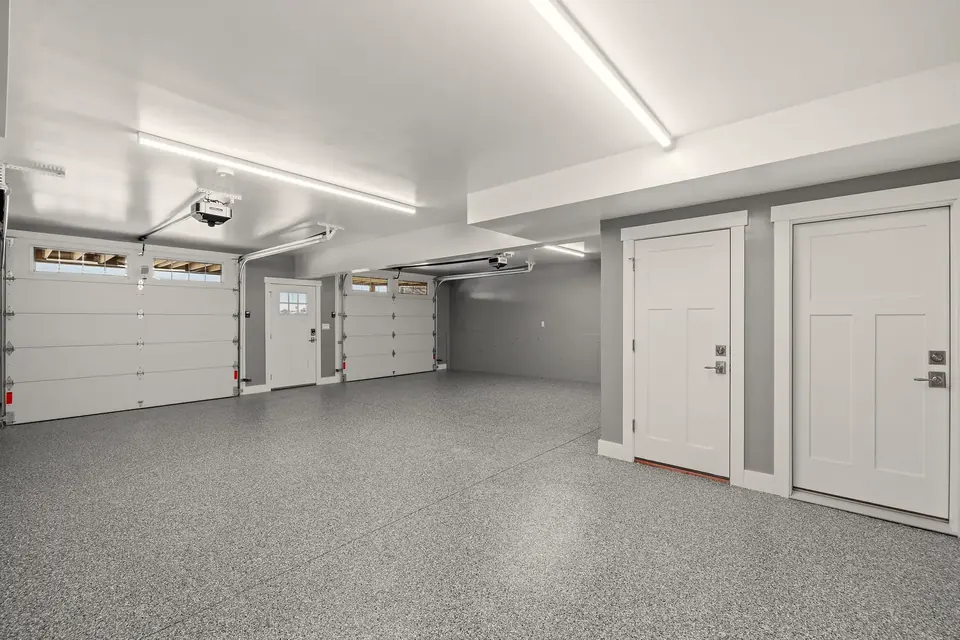
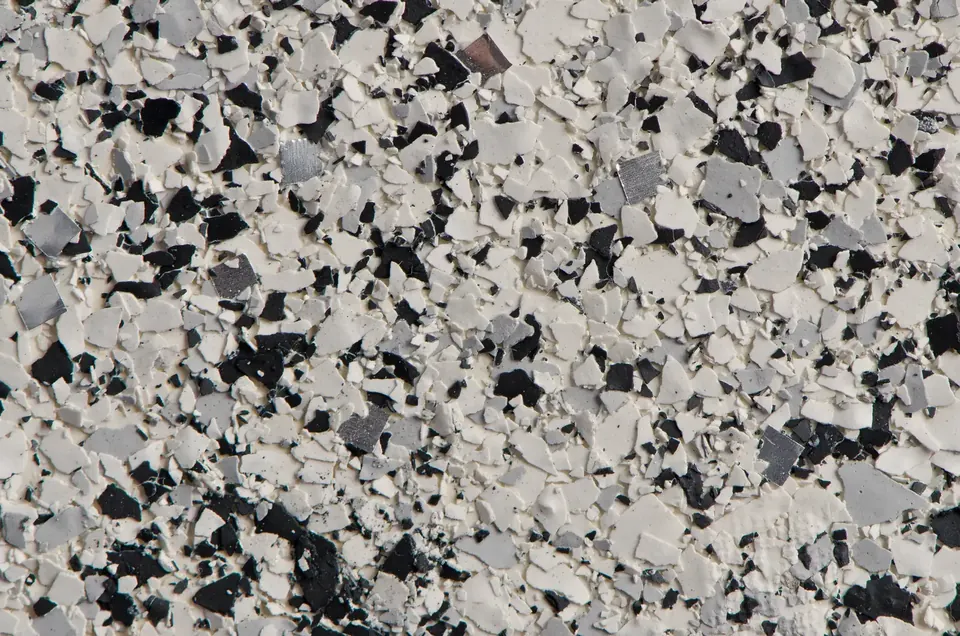
ShownFull-broadcast flake with a clear polyaspartic topcoat
Epoxy flooring services
A coating is only as good as the concrete under it
Most people call us about color. Should the garage be grey flake or tan? Is a metallic floor too much for a basement? Those are fun decisions, and we will get to them, but they come second. The first thing we want to know is what kind of shape your slab is in, because that decides which products will bond and which ones will let go.
Concrete around Waukesha has usually had a hard life. Garage slabs soak up salt brine every winter. Basement floors sit over soil that stays wet well into spring. Shop floors have decades of oil pressed into them. A resin floor can handle all of that once it is installed, but it cannot be rolled over the top of those problems and expected to hold.
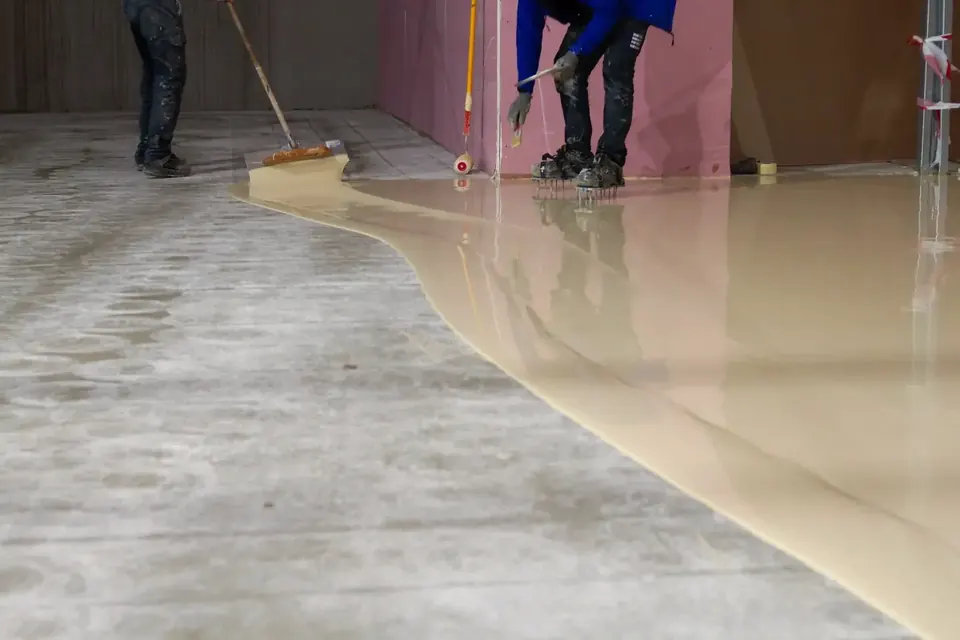
So our work starts with a grinder, a moisture meter and an honest look at the cracks and joints. From there we build the floor in layers: a primer chosen for your slab, a body coat that gives the system its thickness, and a topcoat matched to how the room is used. The result is a floor that is easy to clean, hard to stain and far better looking than bare concrete, in a home or in a business.
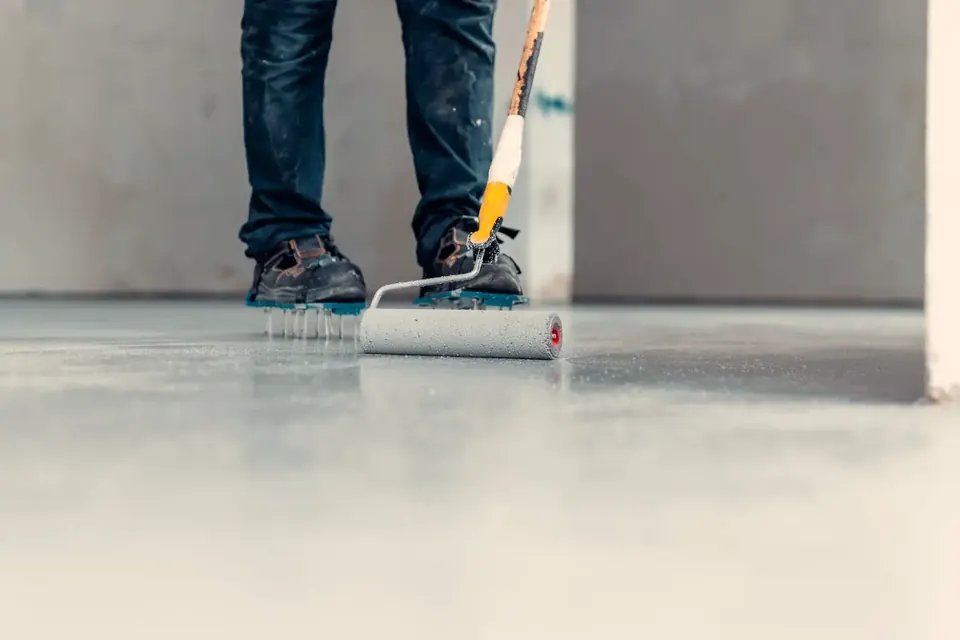
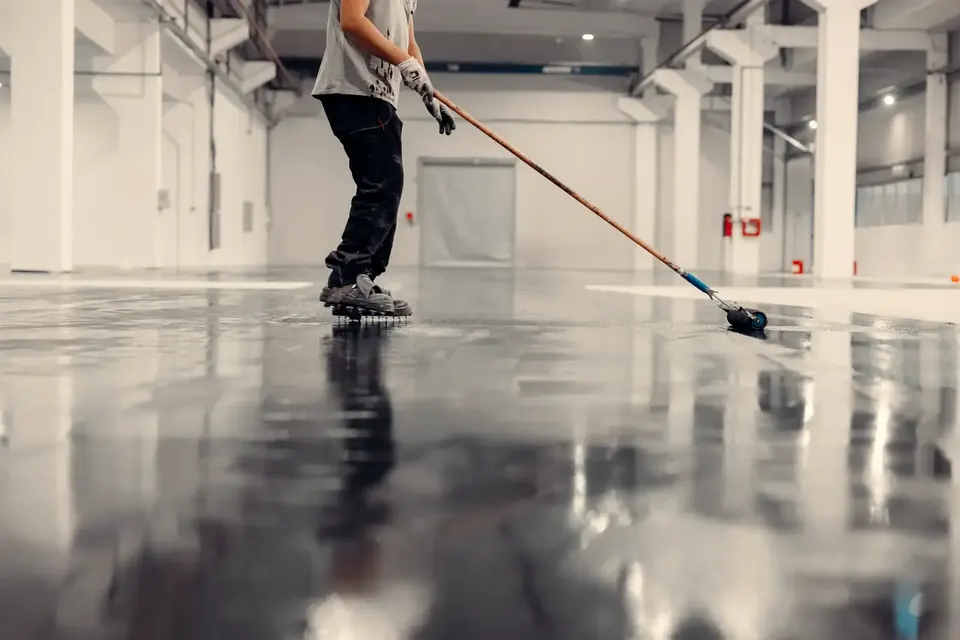
Roller applying a primer coat across freshly ground concrete
What we install
Nine services, one standard of preparation
Each service below has its own page with system options, finish choices and answers to the questions we hear most. If you are unsure where your project fits, start with the room and we will help you narrow down the chemistry.
Why property owners choose a prep-first contractor
There are plenty of ways to make a floor look good for the first six months. These are the habits that keep it looking good after six winters.
We grind, every time
Acid etching is quick and cheap, and it leaves a surface that is uneven at best. We open the concrete with diamond tooling connected to dust-collecting vacuums. That gives the primer a clean, consistent profile to lock into and keeps the dust out of your house.
Moisture gets measured, not guessed
A slab can look bone dry and still push vapor through a coating. We test before we recommend anything. If the readings are high, we talk about moisture-tolerant primers or, in a few cases, a different kind of floor altogether.
The system fits the room
A basement rec room, a two-car garage and a machine shop do not need the same product. We choose resins by what the floor will face: salt, sunlight, forklifts, pets, spilled coolant or simply bare feet.
Repairs are part of the job
Pitted aprons, spalled patches and wandering cracks are normal here. We rebuild them with repair mortars and flexible fillers before coating, so the damage does not telegraph through the finish.
You get a written scope
Before work begins you will know the square footage, the preparation method, each layer going down and how long to stay off the floor. No vague line items, and no surprises on install day.
Straight answers on limits
Coatings do a lot, but not everything. If your slab has an active water problem or is breaking up from below, we will tell you that instead of selling you a floor that is bound to fail.
For homeowners
Residential epoxy flooring for the rooms that take the abuse
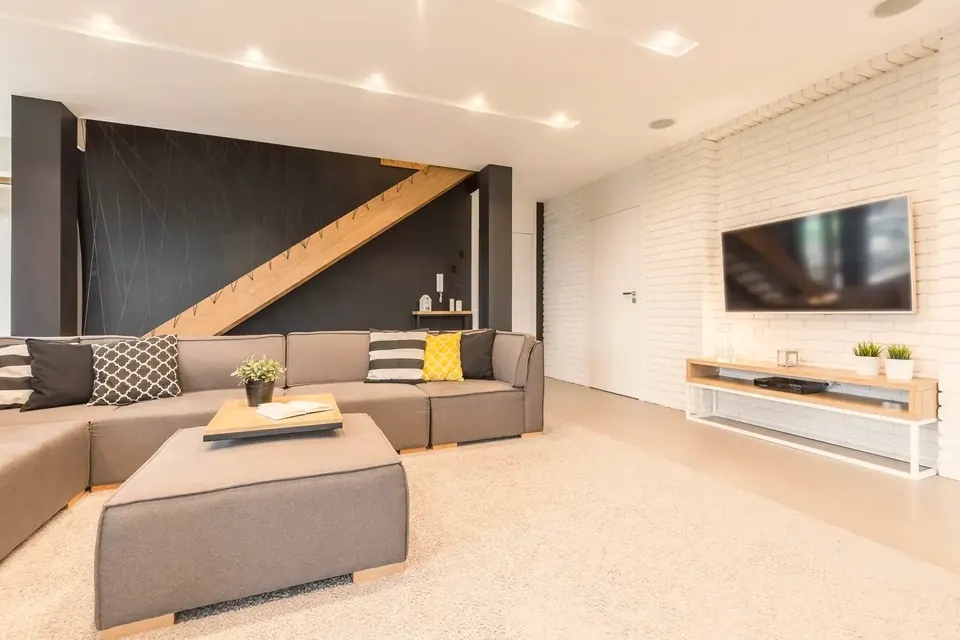
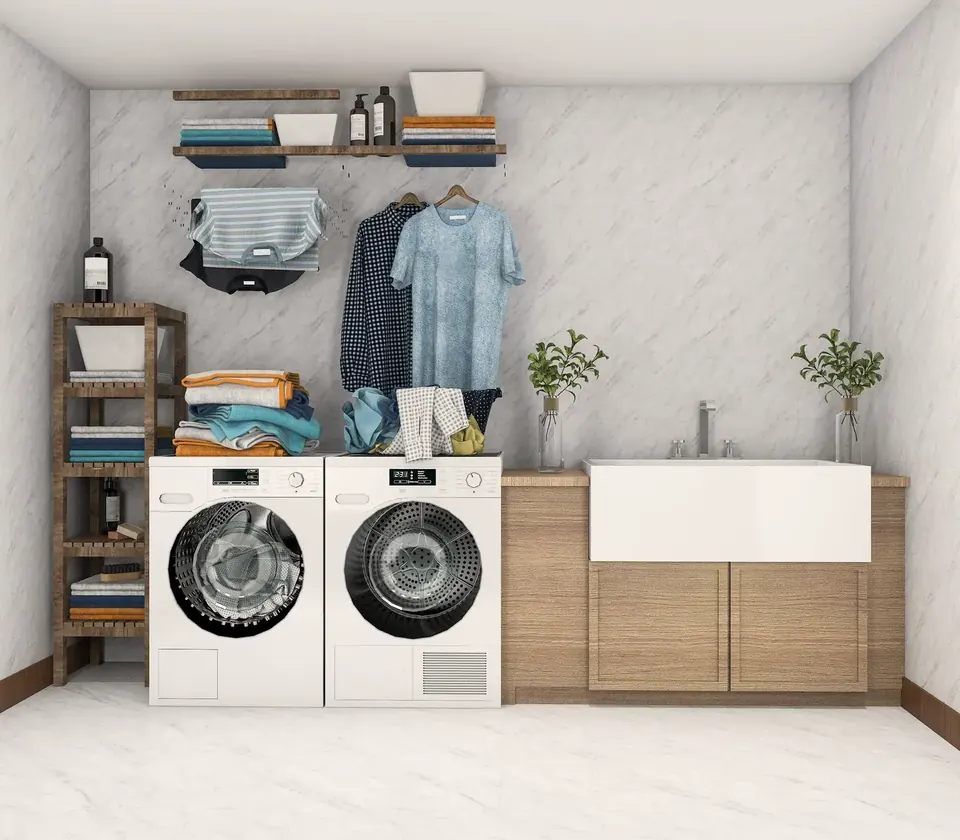
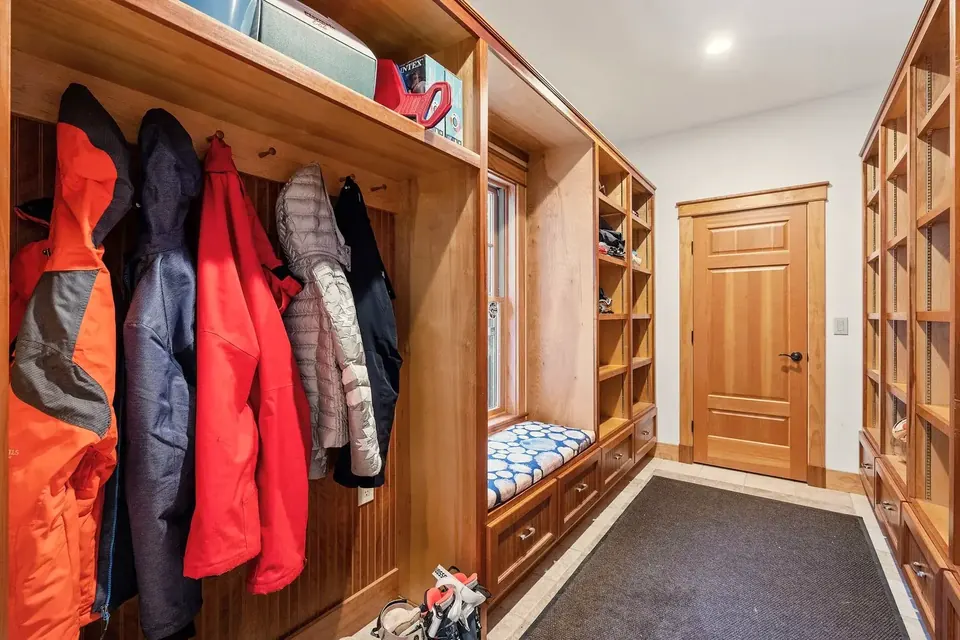
Inside a house, coated concrete makes the most sense in the places where carpet and laminate struggle: lower levels, laundry rooms, mudrooms, home gyms and utility areas. These are the spots that see wet boots, a washer that overflows once a decade and furniture that gets dragged instead of lifted.
A resin floor has no seams or grout lines, so there is nowhere for water or dirt to settle. It wipes clean with a mop and a mild cleaner. It can also be far warmer in appearance than people expect. Soft neutral flake blends, satin solid colors and stone-like metallic finishes all sit comfortably next to drywall and trim.
We keep interior work tidy. Furniture and stored items are moved or protected, grinding is done with vacuum shrouds, and we use low-odor products where the house will be occupied during the job.
Garage epoxy flooring that stands up to salt and hot tires
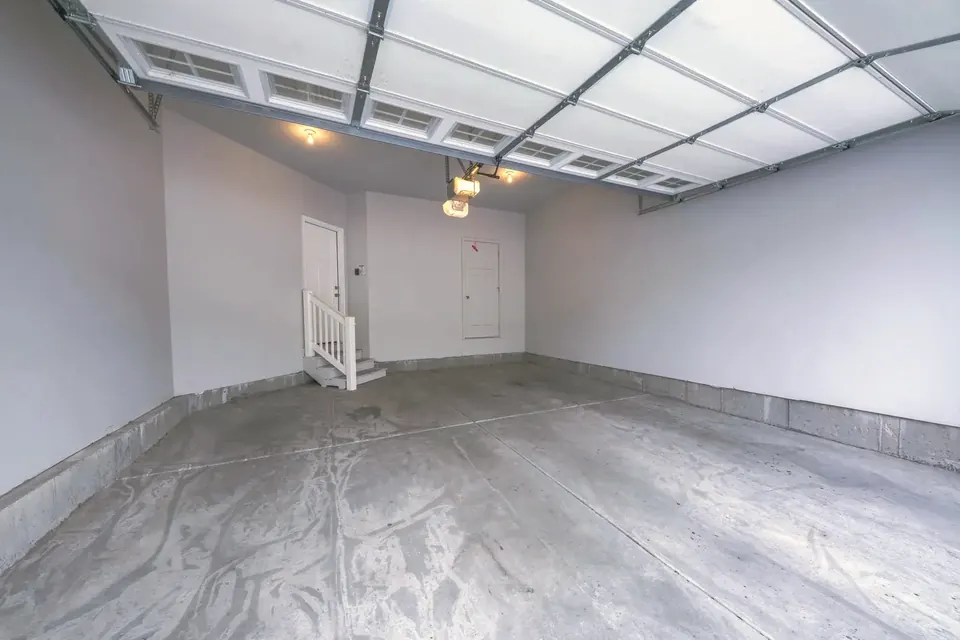
The garage is the hardest-working slab on most properties, and in this part of Wisconsin it gets very little mercy. From November to March every vehicle carries in slush loaded with road salt. That brine sits in puddles, soaks into bare concrete, and then freezes and thaws for months. The pitting you see near the overhead door is the result.
A properly installed garage coating seals the surface so the brine stays on top where a squeegee can deal with it. Decorative flakes hide dust and tire tracks between cleanings, and a light texture keeps the floor from turning slick when it is wet. In summer, the right topcoat resists the softening and lifting that hot tires cause on hardware-store paints.
Most Waukesha garages we look at are good candidates for a full-broadcast flake floor with a polyaspartic topcoat. For collectors and hobbyists who want a showroom look, we also install solid-color and metallic systems. Either way, the garage becomes a room you do not mind walking through in socks.
A coating that looks perfect in September still has to get through plow season. We choose primers that bite into cold-climate concrete, topcoats that shrug off chlorides, and textures that give your boots something to grip when the floor is wet. Have the floor done before the snow flies, and spring cleanup is a hose and ten minutes.
Commercial epoxy flooring that keeps a business presentable
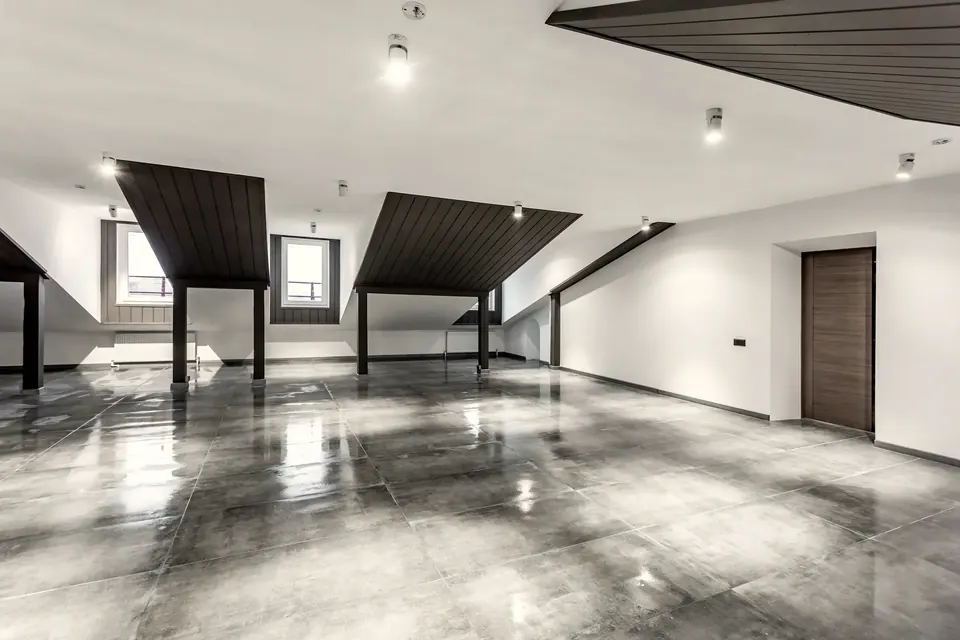
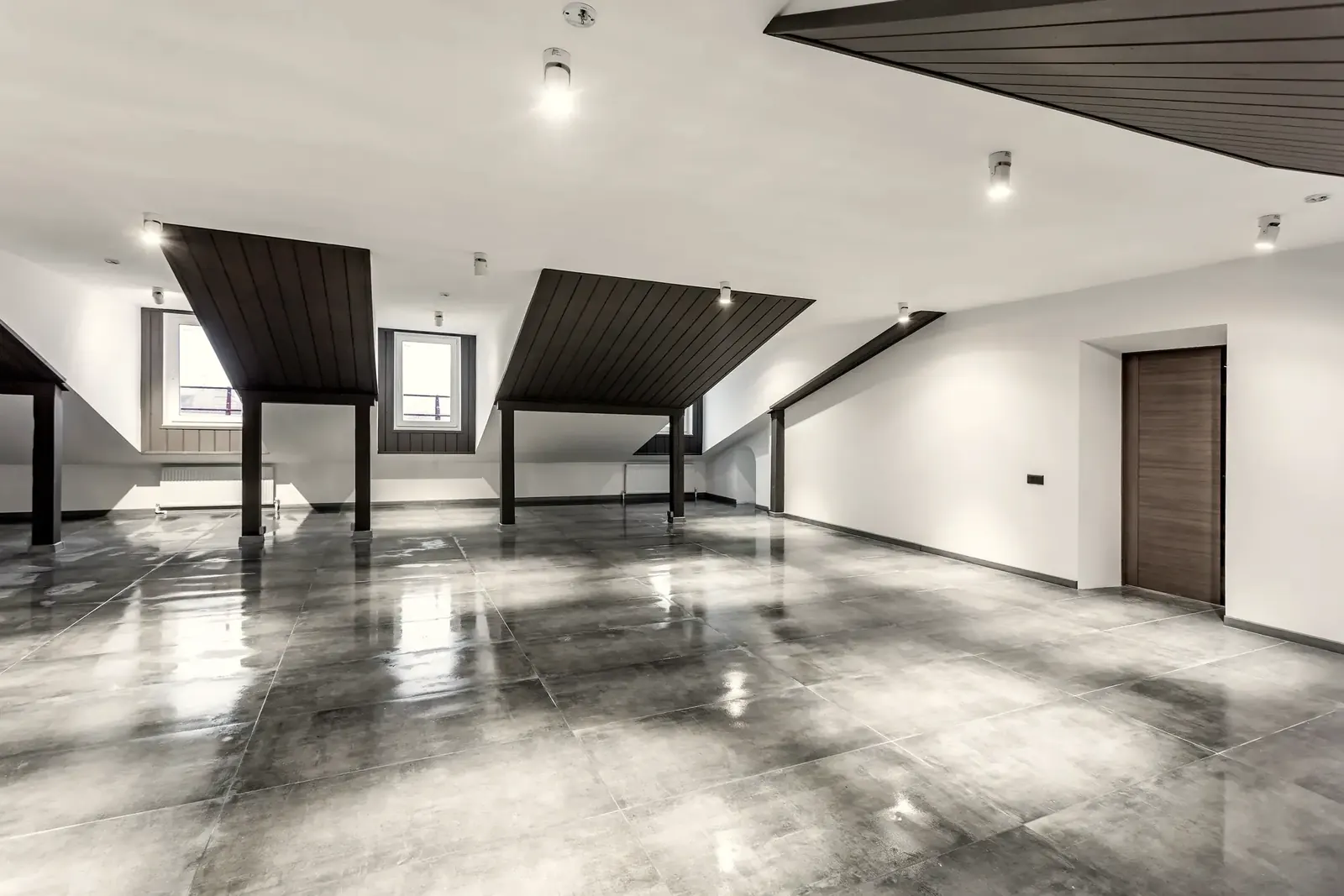
Customers notice floors more than owners think. A worn, patched or stained floor makes a clean shop look tired. Resinous flooring gives retail spaces, offices, clinics, salons, breweries and restaurant kitchens a surface that is bright, easy to sanitize and tough enough for daily foot traffic and rolling loads.
Commercial work is mostly about planning. We schedule around your hours, phase larger areas so part of the building stays open, and use fast-curing resins when downtime has to be kept to a night or a weekend. Slip resistance is tuned to the space: more texture behind a bar or at an entry where snow gets tracked in, less in a showroom where appearance leads.
Industrial flooring for plants, shops and warehouses
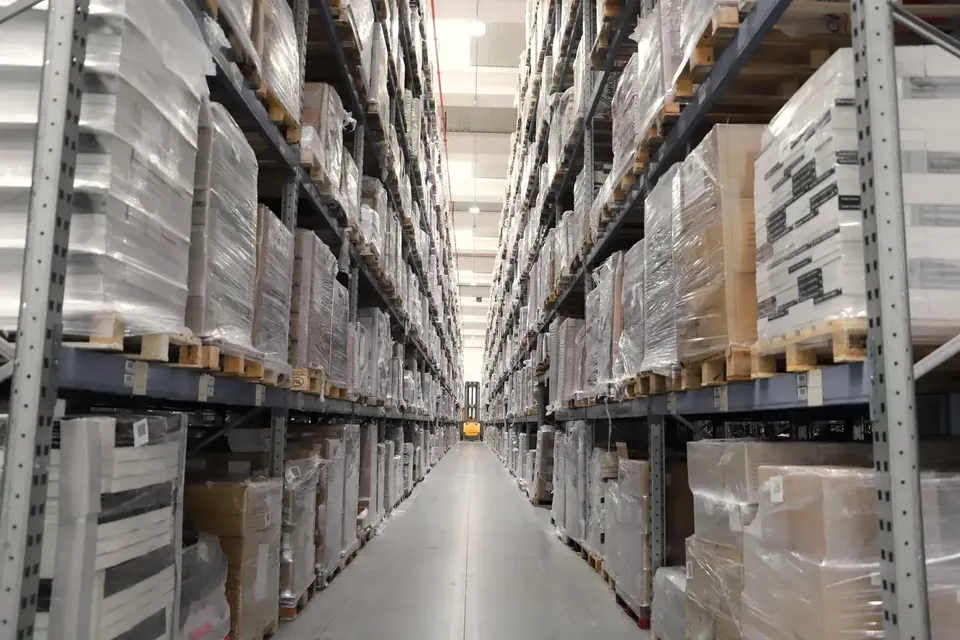
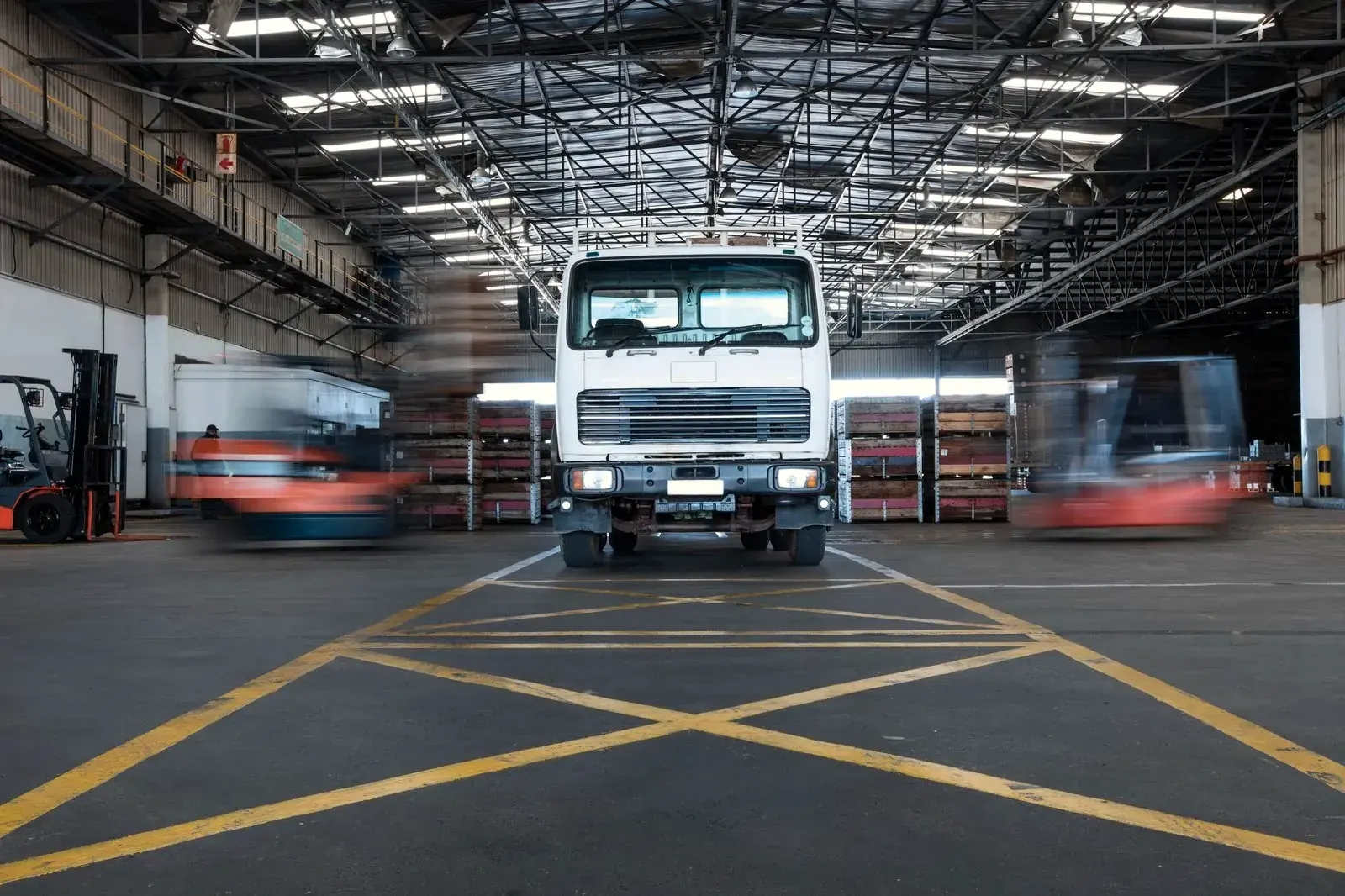
Waukesha has made things for a long time, and a lot of that work still happens on concrete that was poured decades ago. Bare slabs dust, absorb oil and break down at the joints under pallet jacks and forklifts. A high-build industrial coating stops the dusting, brightens the building by reflecting light, and gives you a surface that can be scrubbed by machine.
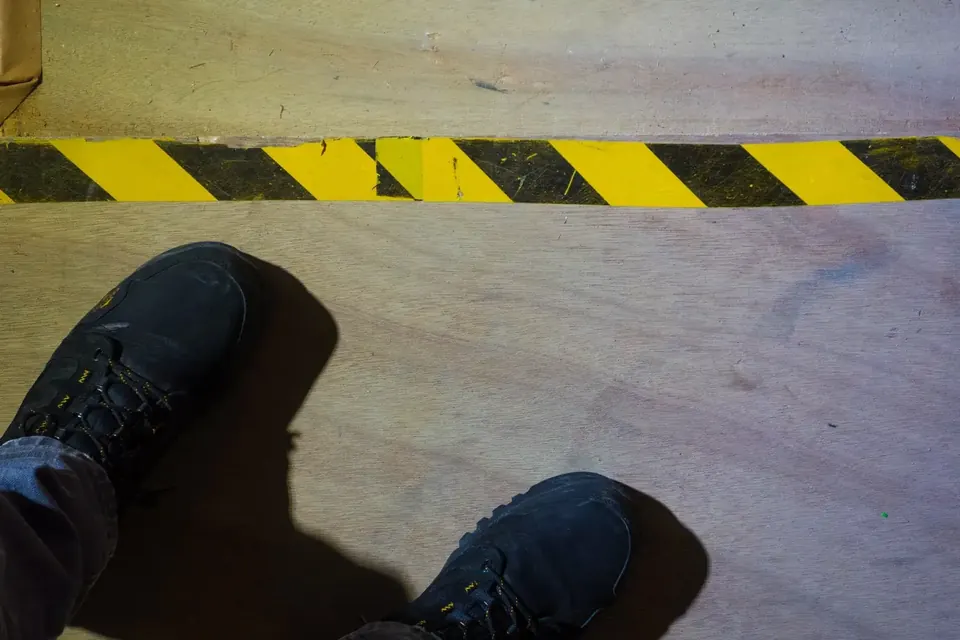
For production and storage areas we install high-solids epoxy, urethane topcoats where abrasion or chemicals are a concern, and line striping for aisles, pedestrian lanes and staging zones. Joints are treated according to how they move. The goal is simple: a floor that works as hard as the equipment on it and does not need attention every year.
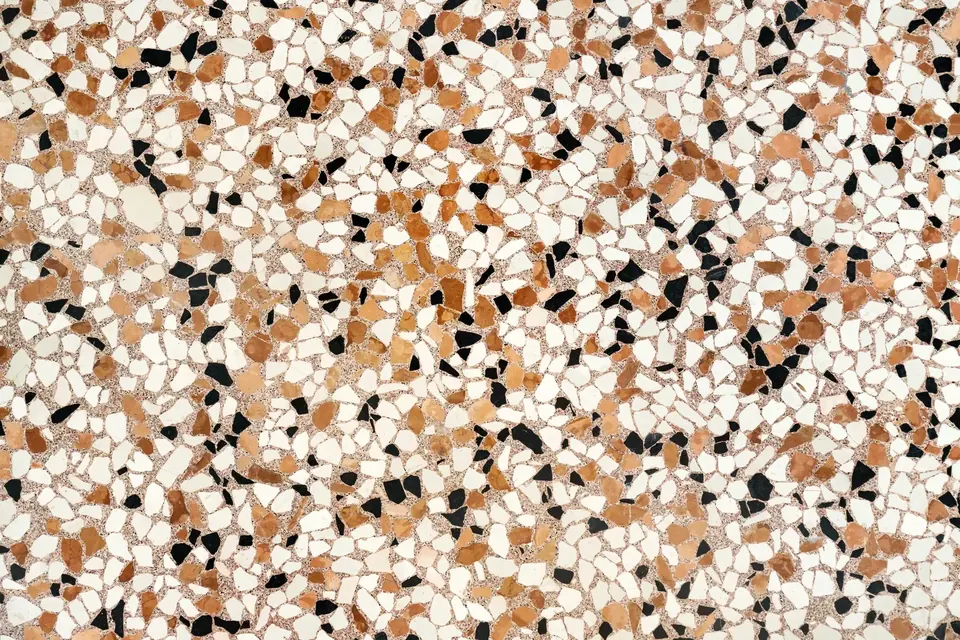
Function comes first, but nobody wants an ugly floor. These are the finishes people ask about most. Samples look different under your own lights than on a screen, so we bring them to the estimate.
Deeper bronze and cream tones with more drama. A favorite for lower-level bars, lounges and retail feature areas.
Below grade and hard-working
Basement and workshop floors
Basements in Waukesha County sit in heavy soil that holds water, which is why so many of them have a sump crock in the corner. Coating a basement floor is entirely possible, but it has to begin with moisture testing. When the numbers are reasonable, we use a vapor-tolerant primer and a breathable build so the floor stays put through the wet season.
The payoff is real. A coated lower level no longer smells like damp concrete, is far easier to keep clean and gives you a finished surface without layering carpet or wood over a slab that might get wet someday.
Workshops are a different animal. A home woodshop, a mechanic's bay or a hobby space needs a floor that takes dropped tools, rolling cabinets and the occasional spill of oil or finish. We usually steer shop owners toward a thicker epoxy body with a chemical-resistant topcoat and enough texture to stay safe when sawdust is down.
Every floor follows the same order. The products change from job to job, but the steps do not get skipped.
01
Site visit and testing
We measure the space, check the slab for moisture and hardness, and look at cracks, joints and old coatings. You see samples and get a written scope with the system we recommend.
02
Protect and prepare the room
Walls, door tracks and anything that stays in the room are masked. Stored items are moved out. In a garage, that usually means the day before we arrive.
03
Diamond grinding
The surface is ground to remove sealers, laitance and contamination and to open the pores. Edges and corners are done by hand so the coating bonds right up to the wall.
04
Crack and joint repair
Cracks are chased and filled, pits and spalls are rebuilt, and control joints are treated according to the finish you chose.
05
Primer, body coat and finish
The primer goes down first, then the color or build coat with flakes, quartz or metallic pigment if they are part of the design. Once that cures it is scraped, vacuumed and sealed with one or two topcoats.
06
Cure and walkthrough
We walk the floor with you, go over care instructions and give you clear timing for foot traffic, furniture and vehicles.
What you gain
Benefits of professional epoxy flooring
Do-it-yourself kits have their place, but they are thin, and the instructions leave out the preparation that actually matters. Here is what a professionally installed system gives you instead.
A bond that lasts
Mechanical preparation and a proper primer mean the coating becomes part of the slab. It does not peel at the tire tracks or flake off where water sits.
Real thickness
Professional systems are several times thicker than a one-coat kit. That thickness is what resists impact, abrasion and dropped tools.
Easier cleaning
Sealed, non-porous floors do not hold dust, oil or salt. Sweep, mop, or hose it out and squeegee toward the door.
A brighter, more usable room
Light-colored, reflective floors bounce light around. Garages and basements feel bigger, and you can actually find the screw you dropped.
Planning guide
Numbers worth knowing before you plan
9
coating services
One contractor for garages, interiors, patios and commercial space.
55
degrees, give or take
The slab temperature most standard epoxies want in order to cure. Fast-cure polyaspartics tolerate much colder concrete.
24
hours to walk on it
Typical wait before light foot traffic on most of the systems we install.
72
hours before parking
A common wait for epoxy garage floors. Polyaspartic systems are often ready sooner.
Local conditions
Flooring solutions for Wisconsin properties
Floors here move through a wide temperature range. A slab that sits at ten below in January can be damp and sixty-five degrees by May. Concrete handles that by expanding, contracting and cracking along its joints. Coatings have to be chosen and installed with that movement in mind.
That is why we pay attention to a few things a contractor in a milder climate could ignore. We fill control joints with flexible material, not rigid epoxy, when they are still moving. We look closely at the first few feet inside the garage door, where freeze-thaw damage is always the worst. And we schedule with the weather: standard epoxies in the warmer months, cold-tolerant polyaspartic and polyurea systems when a project has to happen in late fall or winter.
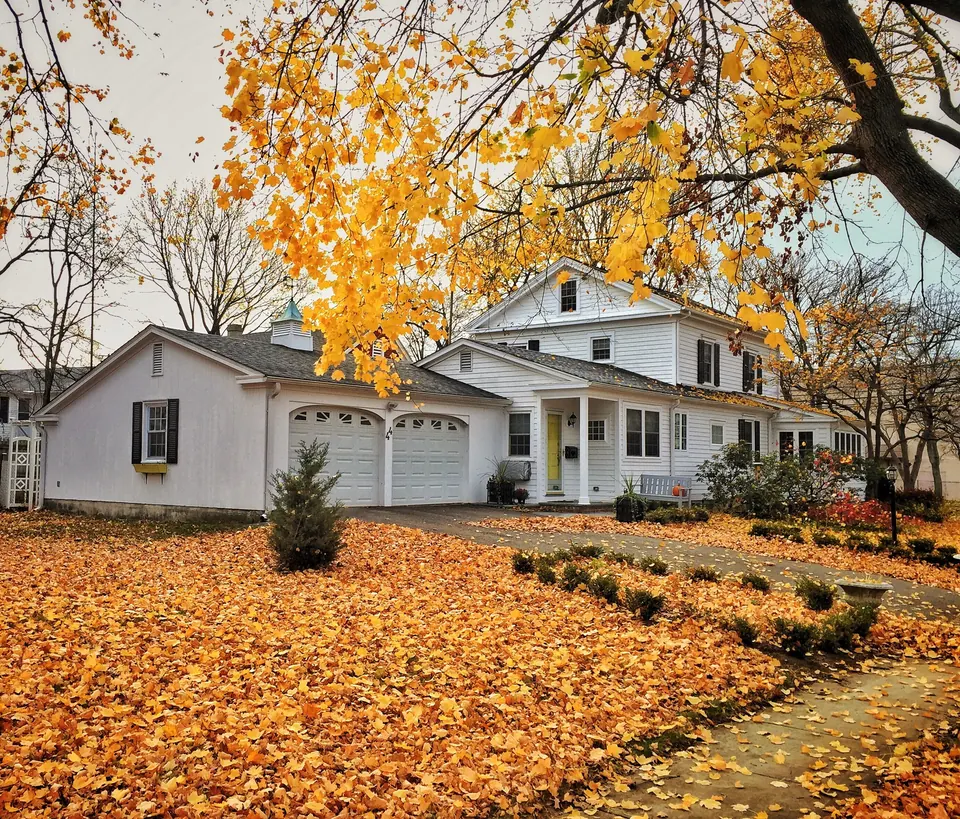
Older homes near downtown Waukesha often have detached garages with thin, uneven slabs. Newer subdivisions tend to have large attached garages poured over well-compacted fill. Each calls for a slightly different plan, and that is the kind of detail we sort out at the estimate.
Gallery
Featured floors and finishes
A look at the systems described on this site, from flake garage floors to polished-looking commercial space.
Photos illustrate the coating systems and finishes we install. They are representative images, not a record of specific local projects.
Service areas
Serving Waukesha and the communities around it
We work throughout Waukesha and across the county, from lake-country garages in Pewaukee and Delafield to commercial space along the I-94 corridor and shops in the industrial parks south of town. If you are a short drive from Waukesha, there is a good chance we cover your address. Ask when you request a quote and we will confirm.
Short answers to what Waukesha homeowners and facility managers ask us first.
How long does an epoxy floor last in a Wisconsin garage?
With proper grinding and a quality topcoat, a residential garage floor should give you many years of service. The things that shorten its life are poor preparation, moisture coming up through the slab and dragging sharp metal across the surface. Salt on its own will not hurt a sound coating.
Can you coat my floor in winter?
Often, yes. Standard epoxy needs a slab that is roughly 55 degrees or warmer, which rules out an unheated garage in January. Polyaspartic and polyurea products cure in much colder conditions, so winter garage work is possible with the right system. Heated basements and commercial interiors can be coated year-round.
My garage floor is pitted near the door. Is it too far gone?
Usually not. Salt pitting and shallow spalling are repaired with a polymer mortar after grinding, and the coating goes over the patch. If the concrete is breaking up through its full depth we will say so, but that is uncommon.
Will the floor be slippery when it is wet?
A smooth, high-gloss floor can be. For garages, entries and anywhere water is expected we add a fine traction additive to the topcoat or rely on the texture of a flake broadcast. You can choose how much grip you want.
How soon can I park on it?
It depends on the chemistry. A traditional epoxy system usually needs about three days before vehicles. A polyaspartic topcoat system is often ready for a car within 24 to 48 hours. We give you exact timing for your floor.
Do you move everything out of the garage?
We ask that the floor be clear before we arrive. If you need a hand with a heavy item or two, tell us at the estimate and we will plan for it.
What does a coated floor cost?
Price depends on square footage, the condition of the concrete and the system you choose. A slab that needs a lot of repair costs more than a clean, newer one. After a site visit we give you a firm written number, not a range.
Request a quote
Ready to see what your concrete can become?
Share a few details and we will get back to you to schedule a visit. Seeing the slab in person is the only way to give you an accurate number.